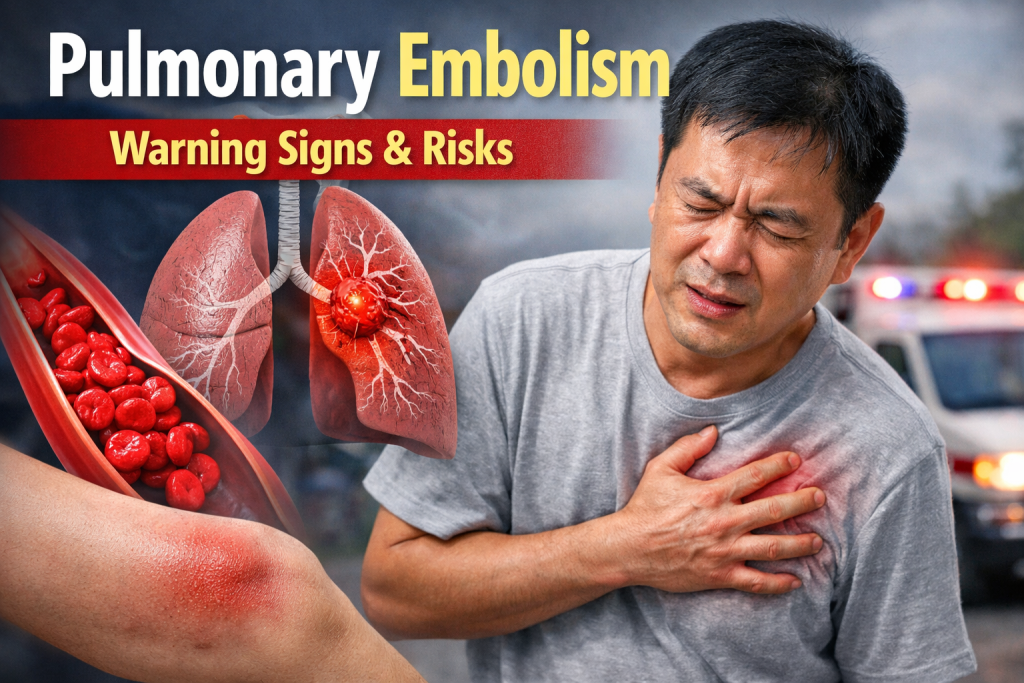
A pulmonary embolism, or PE, happens when a blood clot blocks an artery in the lungs. In most cases, the clot starts somewhere else first, usually in a deep vein in the leg, then travels through the bloodstream to the lungs. Because that blockage can sharply reduce blood flow, strain the right side of the heart, and lower oxygen levels, PE is considered a medical emergency. Prompt diagnosis and treatment can be lifesaving.
Pulmonary embolism is part of a broader condition called venous thromboembolism, or VTE, which includes both deep vein thrombosis (DVT) and PE. This connection matters because many lung clots begin as DVT, and some people have warning signs in the leg before they develop chest symptoms. But not everyone does. A person can develop PE even without obvious DVT symptoms first.
This guide explains what pulmonary embolism is, how blood clots in the lungs happen, which symptoms deserve urgent attention, who is most at risk, and why recognizing PE quickly is so important.
What is a pulmonary embolism?
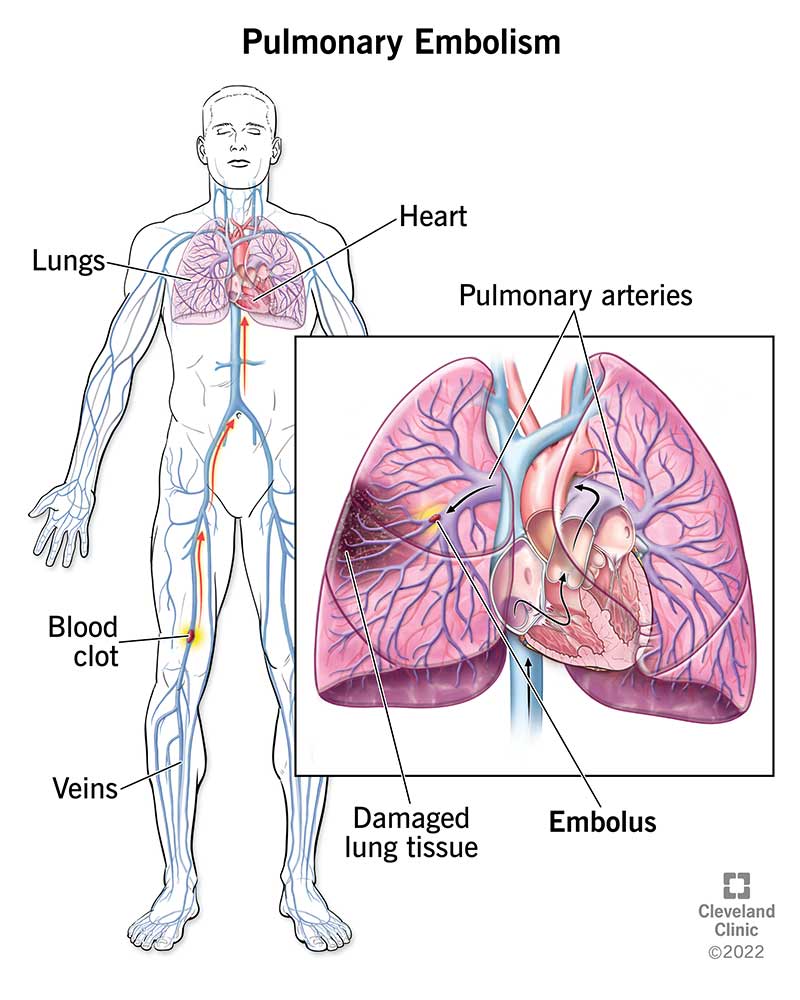
A pulmonary embolism is a blockage in one of the blood vessels in the lungs, most often caused by a blood clot. These clots typically begin in the deep veins of the lower body, especially the legs, then travel through the veins, pass through the right side of the heart, and lodge in the pulmonary arteries. Once stuck there, the clot can interfere with blood flow through the lungs and reduce the body’s ability to oxygenate blood effectively.
The seriousness of a PE depends on several things, including the size of the clot, how many arteries are blocked, and whether the heart is under strain. Small emboli can still be dangerous, but large or multiple clots can cause rapid deterioration, including shock, fainting, or even sudden death. That is why healthcare providers treat suspected PE as an urgent problem, not something to watch at home and hope passes on its own.
Although blood clots are the most common cause, emboli can occasionally involve other material, such as fat, air, or tumor cells. Still, when people talk about pulmonary embolism in day-to-day medical care, they usually mean a blood clot in the lung.
How blood clots in the lungs develop
Most pulmonary emboli start as deep vein thrombosis. A clot forms in a deep vein when blood flow slows down, the blood vessel wall is injured, or the blood becomes more prone to clotting. These factors are often described through Virchow’s triad: stasis, vessel injury, and hypercoagulability. When part of a clot breaks off, it becomes an embolus and can travel to the lungs.
This is why long periods of immobility, major surgery, cancer, trauma, pregnancy, and inherited clotting disorders matter so much. They all raise clot risk in one or more of these ways. The result may be a clot that forms quietly in the leg and causes few symptoms until it reaches the lungs.
Common symptoms of pulmonary embolism
PE symptoms can vary widely. Some people become suddenly very ill. Others have milder or less specific symptoms at first. In general, the most common warning signs include shortness of breath, chest pain that gets worse with a deep breath, fast breathing, and a fast or irregular heartbeat. Coughing, especially if there is blood in the mucus, can also occur.
Symptoms people often notice first
Many people with PE describe one or more of the following:
- sudden shortness of breath
- sharp chest pain, especially when breathing deeply or coughing
- rapid heartbeat or palpitations
- coughing or coughing up blood
- feeling lightheaded, dizzy, or faint
- unexplained rapid breathing
- sweating or clammy skin
- leg pain or swelling, especially in one leg
Shortness of breath is one of the most common symptoms and can appear quickly. Chest discomfort is often pleuritic, meaning it gets worse with deep breathing. That feature can help distinguish PE from some other conditions, though symptoms can overlap with heart attack, pneumonia, anxiety, and several other urgent problems.
 Severe symptoms that need emergency help right away
 Severe symptoms that need emergency help right away
Some symptoms strongly suggest a large or unstable pulmonary embolism and should be treated as a medical emergency. These include fainting, near-fainting, very low blood pressure, severe breathing difficulty, cyanosis or bluish discoloration, and signs of shock such as confusion, extreme weakness, or a weak rapid pulse.
Call emergency services or seek immediate emergency care if someone has sudden shortness of breath, chest pain, coughing up blood, or lightheadedness that is severe or worsening, especially when risk factors for blood clots are present. CDC specifically notes that difficulty breathing, faster than normal or irregular heartbeat, chest pain that worsens with deep breathing or coughing, cough or coughing up blood, and very low blood pressure, lightheadedness, or fainting all warrant immediate medical attention.
Can pulmonary embolism happen without leg symptoms?
Yes. This is one reason PE can be missed. While many emboli begin as DVT, a person may never notice swelling, warmth, redness, or pain in the leg before lung symptoms begin. The absence of leg symptoms does not rule out PE.
That said, one-sided leg swelling, calf pain, tenderness, warmth, or redness can still be an important clue. Recognizing possible DVT early may prevent a clot from traveling to the lungs.
Major risk factors for pulmonary embolism
Almost anyone can develop a blood clot, but risk rises when several factors combine. CDC notes that DVT and PE become more likely with vein injury, slowed blood flow, and conditions that make blood clot more easily. Common triggers include fractures, severe muscle injury, major surgery, immobility, hospitalization, cancer, pregnancy, and certain medical conditions.

1. Prolonged immobility
Sitting or lying still for long periods slows circulation in the legs. This can happen during hospitalization, recovery from illness, bed rest, or long-distance travel. Travel-related DVT and PE risk increases with long trips, especially when a person also has other risk factors.
2. Recent surgery or major injury
Major operations, especially involving the abdomen, pelvis, hips, or legs, can increase clot risk because of tissue injury, inflammation, and reduced movement during recovery. Serious trauma and fractures also raise the chance of DVT and PE.
3. Cancer and cancer treatment
Cancer is a major clotting risk factor. Some tumors increase clotting activity directly, and treatments such as chemotherapy can raise risk further. People with active cancer are among the highest-risk groups for VTE.
4. Pregnancy and the postpartum period
Pregnancy naturally makes the blood more likely to clot, and that risk remains elevated after delivery. The postpartum period is especially important because clot risk can stay high for weeks after childbirth.
5. Hormonal medications
Birth control pills and hormone therapy that contain estrogen can increase clot risk. The risk is higher in some people than others and can become significantly more concerning when combined with smoking or inherited clotting tendencies.
6. Smoking
Smoking damages blood vessels and contributes to clotting risk. It is particularly concerning when combined with estrogen-containing hormonal medications or other clotting risk factors.
7. Older age
PE can happen at any age, but risk rises substantially as people get older. CDC and NHLBI both identify age as an important contributor to clot risk, in part because older adults are more likely to have surgery, reduced mobility, chronic illness, or hospitalization.
8. Previous DVT or PE
A prior history of venous thromboembolism is one of the strongest predictors of another event. Someone who has had a clot before needs careful follow-up and may need extended prevention measures depending on the cause of the first clot.
9. Inherited clotting disorders
Certain genetic conditions can make blood more likely to clot. These inherited thrombophilias do not guarantee PE, but they can significantly raise risk, especially when combined with other factors such as surgery, estrogen use, or pregnancy.
10. Hospitalization and serious illness
People in the hospital often have several risk factors at once, such as bed rest, infection, surgery, inflammation, central lines, or underlying disease. That is why hospitals pay close attention to clot prevention in patients who are admitted.
High-risk groups who should be especially alert
Some groups deserve a higher level of awareness because PE may be more likely or more dangerous in them. These include people with active cancer, those recovering from major surgery, people who are pregnant or recently postpartum, older adults, hospitalized patients, and anyone with a strong personal or family history of clotting problems.
Young adults are not immune. Even people who otherwise seem healthy can develop PE if they have an inherited clotting disorder, are using estrogen-containing medications, recently had surgery or trauma, or spent long periods immobilized.
Why pulmonary embolism is so dangerous
A pulmonary embolism can become fatal because it blocks blood flow through the lungs and forces the right side of the heart to pump against increased resistance. In severe cases, this can cause right heart strain, low oxygen levels, shock, and sudden cardiovascular collapse. That is why prompt treatment is essential.
Even when someone survives the initial event, PE can lead to longer-term complications. NHLBI notes that some people go on to develop chronic problems related to persistent clot burden or pressure changes in the lung circulation, including chronic thromboembolic pulmonary hypertension in select cases.
When to seek immediate medical attention
Do not ignore symptoms that could fit PE. Emergency evaluation is especially important when sudden shortness of breath, chest pain, coughing up blood, dizziness, or fainting appear out of nowhere or occur in someone with clot risk factors. PE cannot be diagnosed by symptoms alone, but it also should not be dismissed as stress, muscle pain, or “just anxiety” without medical assessment.
A good rule is this: if breathing trouble or chest pain starts suddenly and feels unusual, get medical help right away. Waiting to see if it goes away can be dangerous.
Prevention strategies that matter
Not every pulmonary embolism can be prevented, but risk can often be reduced. Helpful steps include moving regularly during travel, avoiding long uninterrupted sitting, staying active, following post-surgery mobility instructions, using preventive blood thinners when prescribed, and managing modifiable risks such as smoking and obesity. Compression stockings may also be recommended in some situations.
People with multiple risk factors should talk with a healthcare professional before major surgery, during pregnancy, or before long trips. Prevention planning can be especially important for anyone with a previous history of DVT or PE.